Approach
Common approach
1Write the rules downThe pass criteria and thresholds for each check are confirmed with the user's team and saved in a rule file.
2Judge by programEach record is judged against the rules. The same data gives the same result on every run.
3List the basisEach failed record includes its value, the threshold, and the reason.
4Manual reviewThe program lists only the items that need review. A person decides whether to use the data.
Tools
Tool list
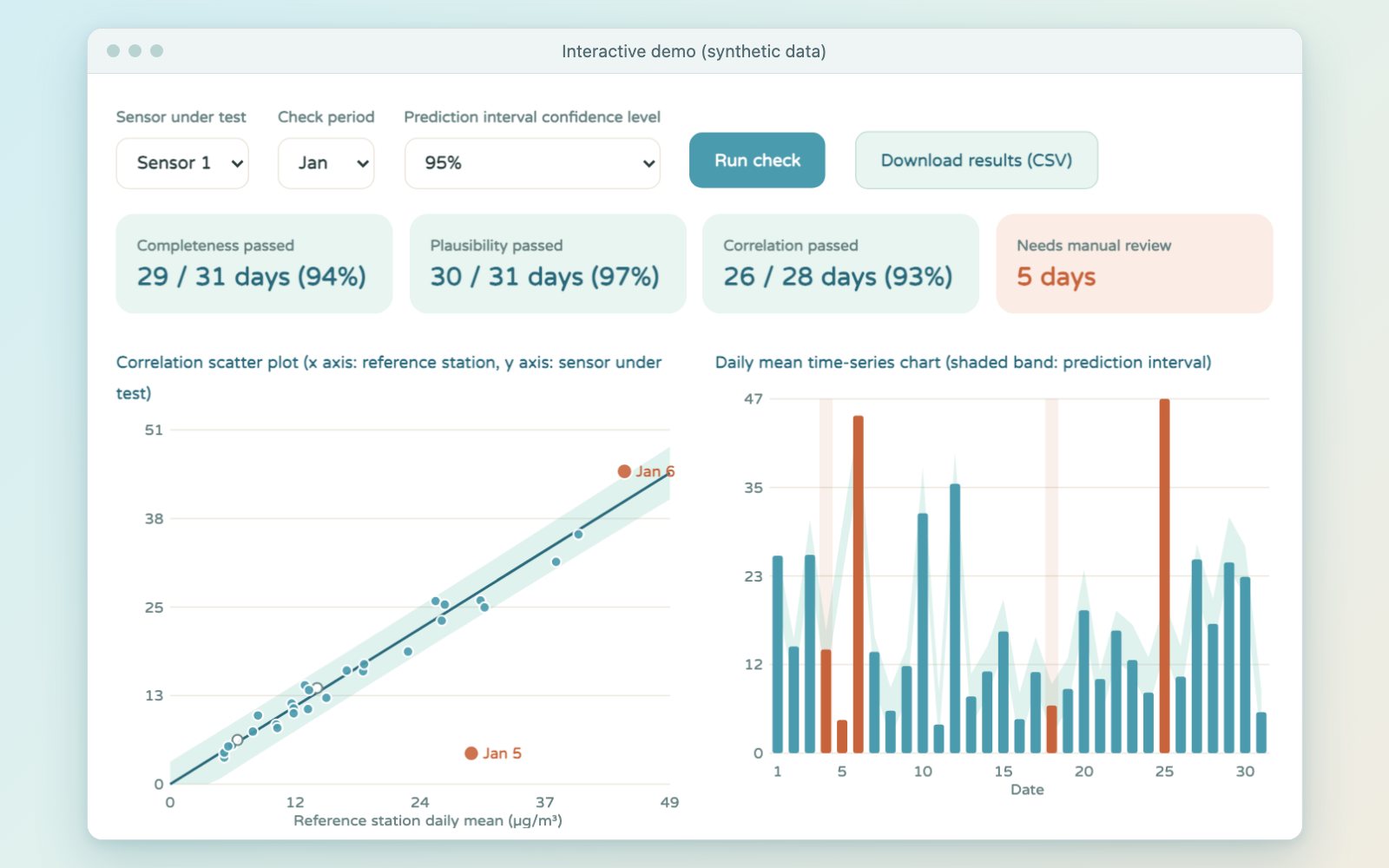
Sensor-versus-reference check tool
The tool uses nearby public stations as a reference. It runs three checks on the readings of a self-installed sensor: completeness, plausibility, and correlation. It has a desktop graphical interface and is packaged as a single executable.
Open description and interactive demo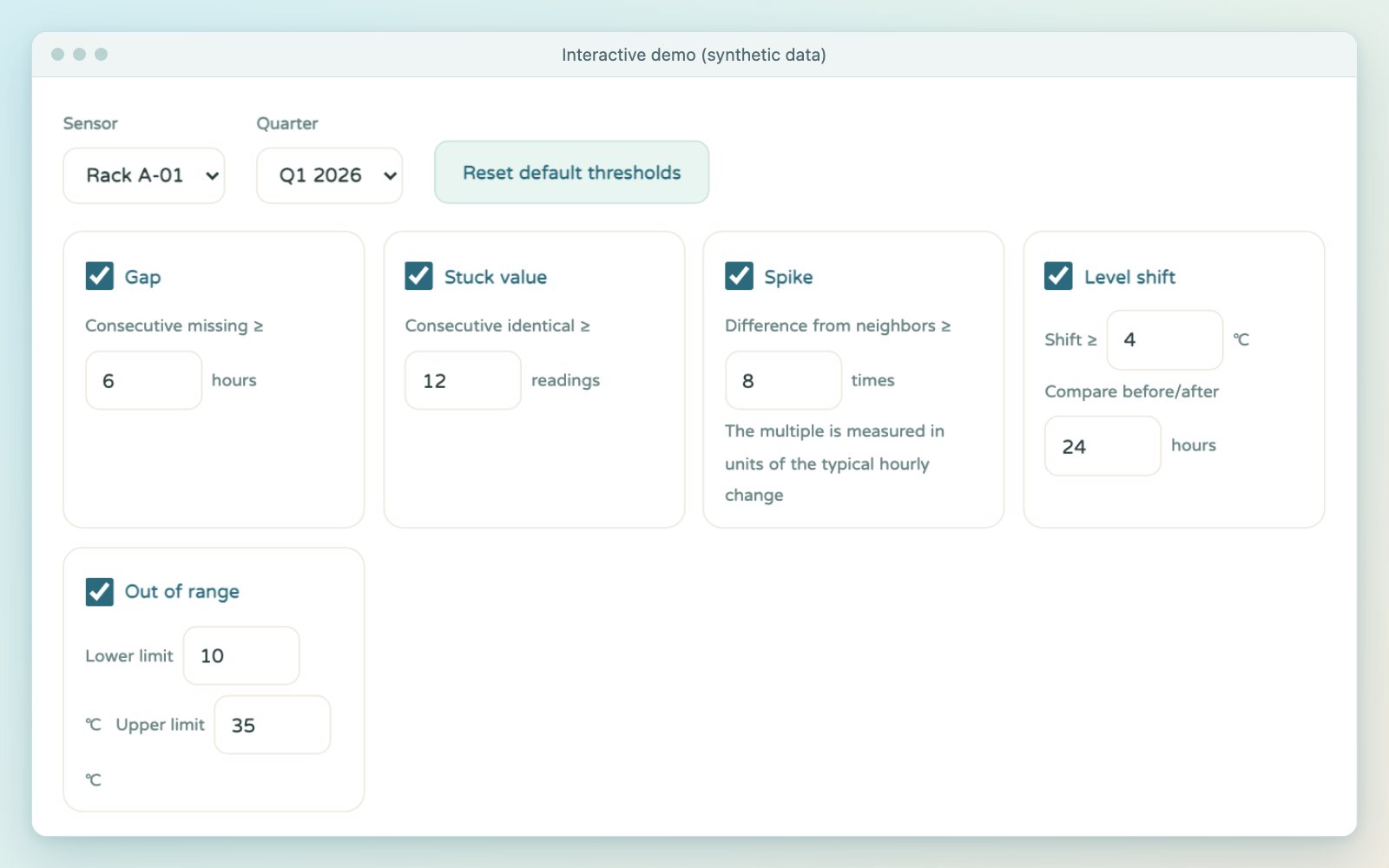
Monitoring time-series anomaly check and plain-language interpretation
The tool checks hourly monitoring data for five anomaly types: gap, flat value, spike, step change, and out-of-range value. It generates an interpretation paragraph and a report for each device from fixed sentence patterns.
Open description and interactive demo